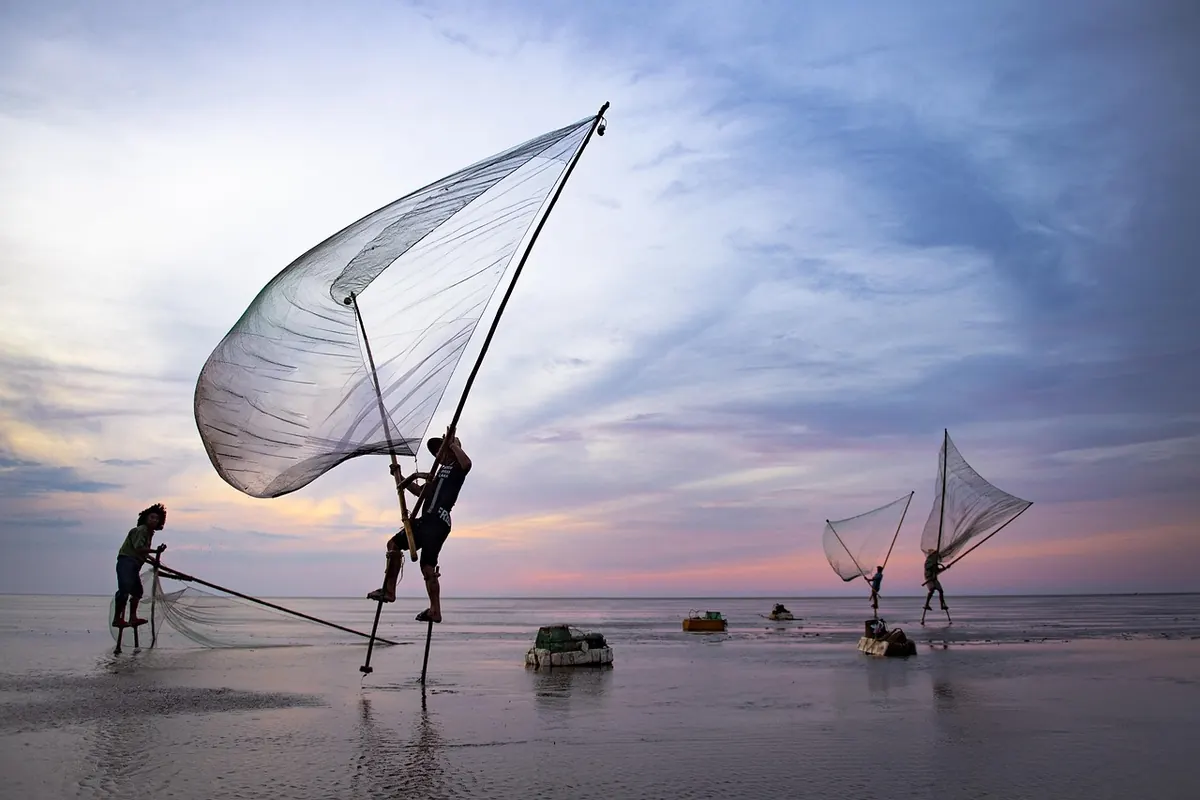
A beach at dusk, a rod on a tripod, and the slow thump of surf somewhere out in the dark. Beachcasting looks simple from the outside: cast out, wait, wind in. In practice, most beginners spend their first few sessions fighting the wind, tangling rigs and wondering where the fish have gone. The good news is that the fundamentals are straightforward. A modest, well-matched outfit fished with a bit of thought will out-fish expensive gear that hasn't been set up properly. Here is what actually matters when you start fishing on sand.
Why the beach is a different game
Pier and boat anglers can drop a bait almost onto a fish. On a beach, you are usually casting into moving water and hoping a fish finds you. The sea is rarely flat and rarely still, and it is working against your tackle from the moment the lead lands.
Fish are often forty, sixty, sometimes a hundred yards out, beyond the reach of a casual flick. Wind and surf pull at your line, which drags the lead and shifts the bait. Tides cover and uncover the ground twice a day, so the features that hold fish, such as gullies, sandbars, deeper holes and the edge of a bank, move and change through the season. You need a rod that can put a lead and bait out there, terminal tackle heavy enough to stay put, and enough knowledge of your beach to know where to aim. Species vary with region and season, from flounder, dab and whiting to codling, bass, dogfish and rays, but the approach stays much the same.
Rod, reel and line: a sensible first outfit
A beachcaster of around 12 to 13 feet, rated to cast 4 to 6oz, covers most British beach work. Longer rods cast further but are heavier to hold in a crosswind, and a rod that is too stiff for your technique will punish every mistake. Match the lead to the rod's casting rating rather than the other way round.
A fixed spool reel in the 6000 to 8000 size range is the easiest starting point: fewer tangles, quicker to learn, and perfectly capable of decent distances. Multipliers cast well once mastered, but they demand thumb control and a bit of patience. Load it with 15 to 18lb mainline and never cast a heavy lead without a shockleader. The old rule of thumb is 10lb of breaking strain for every ounce of lead, so a 5oz lead wants a 50lb leader, with five or six turns around the spool plus enough to reach your rod tip.
Add a tripod rod rest, a headlamp, a waterproof top and a bag you can carry comfortably across soft sand. Warm, dry and organised beats fancy every time.
Rigs and bait without the fuss
Keep it simple for your first season. A two-hook flapper covers most clean and mixed ground. A pulley rig is worth learning for distance and rougher ground, and a running ledger is ideal for fishing close in. Short rigs tangle less and cast more predictably than long ones.
Hooks should match the bait: roughly 1/0 to 3/0 for worm and squid cocktails, larger for big fish baits. Grip or breakaway leads hold bottom in surf, while plain leads roll along the sand and suit cleaner beaches. Baitwise, lugworm and ragworm are the workhorses, frozen squid and mackerel strips add scent and stay on the hook, and peeler crab is a fine bass bait in the warmer months. Bait elastic and a strip of squid will stop small whiting stripping your worm before anything decent finds it.
Reading the tide
Fish feed when water moves. Slack water is often quiet, and the two hours either side of high tide is the classic window, though plenty of marks fish better on the ebb or over low water.
Springs, neaps and features
Spring tides around the new and full moon shift more water, colour it and often bring fish within casting range. Neap tides are gentler and the water can be clearer, which suits some species and not others. Walk your beach at low water whenever you can. Note the darker patches, the gullies and the edge of the sandbank, then aim at them when the flood covers them.
An incoming tide on a shallow beach can move faster than you expect and cut you off behind a bank or channel. Get tide times for your stretch and be clear of the low-water mark well before the flood reaches it.
Casting: the off-the-ground cast
Distance matters far less than control. Learn one cast and repeat it until it is boring.
- Face the sea with the rod tip low, the lead on the sand roughly two rod lengths behind you, line tight and your thumb on the spool.
- Turn your shoulders and hips towards the lead while keeping your eyes on the sea.
- Pull through smoothly, transferring your weight to the front foot so the lead lifts and swings behind you in an arc.
- As the rod comes upright, push with your top hand and punch the butt with your lower hand.
- Release as the rod passes roughly 45 degrees. Too early and the lead climbs; too late and it slams into the sand.
- Do not snatch. A smooth, accelerating swing casts further than brute force and saves your back.
Once the lead lands, wind down the slack rather than striking straight away, then settle the rod in the rest and keep a gentle tension on the line.
Staying safe and out of trouble
- Check tide times and the forecast before you leave, and tell someone where you are going and when you expect to be back.
- Never turn your back on the sea for long; odd larger waves arrive without warning.
- Fish with a companion for your first few dark sessions.
- Look behind you before every cast for walkers, dogs and other anglers.
- Carry a headlamp, spare batteries and a phone in a waterproof pouch.
- Wear studded boots on rocks and slipways, and avoid wading deeper than your knees in surf.
- Take only what you will use, return the rest carefully, and check local byelaws on sizes and limits.
Your first session on the sand
Pick a calm evening on a beach you already know, fish a couple of hours either side of high water, and take one rod with two hooks and fresh bait. Aim at the same spot each cast and leave it there for fifteen minutes before checking. Bites from flounder and whiting often show as small nods, so resist the urge to strike at the first tap. Take a flask, spare gloves and a dry towel.
Expect blanks. A blank session still teaches you how your beach behaves, where the tide reaches and how your gear performs in wind. Change one thing next time, note what happens, and the fish will follow soon enough.
Photo: dangquangn / Pixabay