Small streams are honest places. You cannot bluff a ten-foot cast on a brook that is eight feet wide, and you cannot hide behind a long line when the water is low and clear. What you get instead is intimacy: a wild brown trout of six inches taking a size 16 dry from the pocket behind a rock, the whole thing over in two seconds. Small-stream fishing rewards reading water, moving quietly and putting the fly exactly where it needs to be — and the tactics shift from spring to autumn as water temperature, light and fly life change.
Read the Stream Before You Cast
Most of a small stream is empty. Trout sit where food, cover and slack water come together: the cushion of calm in front of a boulder, the lip of a plunge pool, the dark slot under an undercut bank, the crease where a riffle spills into a deeper run. Flat, open glides rarely produce much unless there is shade or a decent hatch on.
Walk the bank first without the rod. Polarised glasses on, sun behind you where you can manage it, and stop every twenty yards to watch one piece of water for a full minute. Trout give themselves away with a small boil, a flash or a shift of shadow. Then approach from below, keep low, and cast to the fish you have actually seen rather than the water you hope holds one.
Spring — Cold Water, Deep Lies and Small Nymphs
In March and April the water is still cold. Fish are not going to sprint across a shallow for a fly, and they are not going to rise freely either. They sit in the slower, deeper lies and feed close to the bottom, taking whatever the current brings them.
Fish upstream with a short line and a small, heavy nymph — a Pheasant Tail, a GRHE, a tungsten-beaded pattern in a size 14 or 16. Let it trundle along the bottom of the pool and watch the leader rather than waiting for a tug. Better still, watch the fish: if you can see it, you will see it take.
Mid-afternoon is the best of it, once the sun has put a degree or two on the water. The first hatches of the year — large dark olives, March browns, grannom — bring fish up in dribs and drabs. Carry a few dries, but do not assume every rise wants a dry fly. A nymph fished to a rising trout often works when the surface activity is only half convincing.
Early Summer — The Dry Fly Window
This is the best of the small-stream season. The water is warm enough to make fish confident but still carries plenty of oxygen and a little colour. Blue-winged olives, caddis and, on some streams, mayfly bring trout up properly, and the dry fly becomes the obvious tool.
The window can be narrow — often an hour or two around the middle of the day for olives, and the last hour of light for caddis. Klinkhamers, CDC & Elk, Adams and small emergers cover most of it. Keep the fly small, the tippet fine and the cast accurate. One careful cast to a fish you can see beats five hopeful ones to open water.
If fish are refusing, change something specific: go down a size, drop a tippet strength, or sink the leader under the surface film. The rise form tells you what is happening. A splashy, confident rise means commitment. A head-and-tail rise, nose just breaking, suggests an emerger or a spent spinner — match it with a size 18 and a bit of patience.
High Summer — Low, Clear and Careful
By July, small streams can be desperate: shallow, gin-clear and full of nervous fish. The margin for error goes. Fish early and late, when the light is off the water and the air is cool.
Lengthen the leader to nine or twelve feet, down to 5x or 6x, and fish upstream so you stay behind the trout. Get out of the water where you can, or wade as if the streambed is made of glass. Stay low. A crouched approach behind a bank of cow parsley catches more fish than any fly.
Terrestrials come into their own: ants, small beetles, a black gnat fished dead drift along an undercut bank. Trout in low water sit tight to cover and will often take a fly that lands inches from the bank, so put it there — and be ready the moment it touches down. Tuck casts, bow-and-arrow casts and a little dapping under overhanging branches all have their place; a clean overhead cast usually does not.
Autumn — A Short Season Worth Fishing Hard
Autumn is brief. In England and Wales most brown trout river seasons close at the end of September, so check your local byelaws before planning a late trip. Where you can fish on, trout feed hard, and where grayling are present they fill the gap nicely through the colder months.
Fish are less fussy now and more willing to move for something with substance. Go slightly bigger: a size 12 GRHE, a great red sedge, a small weighted streamer swung through a pool. Work the deeper runs and the tails of pools, where fish tend to gather.
Handle fish carefully as the season closes and spawning approaches. Keep them in the water, wet your hands, use a knotless net and avoid dragging them onto dry gravel. A fish returned properly today is next spring's sport.
Kit, Stealth and Presentation
Small streams punish over-gearing. You want a short, light rod you can cast accurately under branches and pick line off the water quickly. Most of the work happens at ten to twenty feet.
- A 7ft to 8ft rod in line weights 3 or 4, with a tip soft enough to protect fine tippets
- A double taper or short-belly line, which rolls and mends better in tight quarters than a long-belly weight-forward
- A braided or furled leader, plus 5x and 6x tippet
- Polarised sunglasses and a cap — you will see fish you would otherwise walk straight past
- A small landing net and forceps
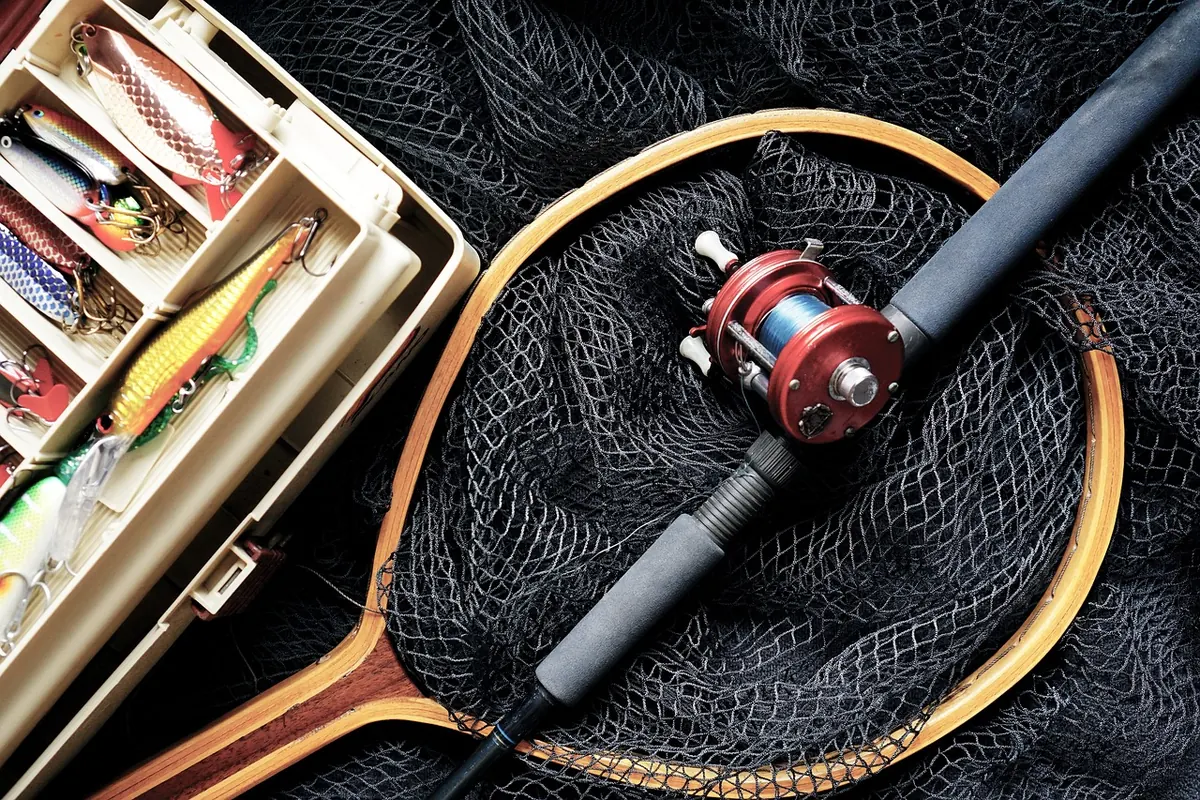
- One small box: a few nymphs, a handful of dries and three or four terrestrials will cover the season
Three habits that matter more than gear
Approach from downstream. Cast upstream, so the fly arrives before the leader. And cover water: small streams are best fished like a walk, working a mile of pockets rather than flogging one pool to death.
Pulling It Together
The season has a shape. Heavy nymphs and cold, deep lies in spring. Dry flies and narrow windows in early summer. Fine tippets, terrestrials and early mornings in high summer. Then a short, urgent burst in autumn before the season closes.
Keep a rough log of date, water level, hatch and what took fish. After two or three seasons you will have your own local pattern, and that is worth more than any fly list. Take one box, walk quietly, and fish the awkward bits of water. That is where the trout are.
Photo: bitnikgao / Pixabay